Winter hiking in Utah is a completely different experience, and I love it! But you do need to be more prepared than you might have to be in the summer.
If you’re heading to any of the Utah National Parks in winter, here’s what you should bring:
1. Traction for Your Shoes (Crampons or Microspikes)
This is the one of the most helpful tools for hiking in the snow and ice. Even when it starts to warm up, Snow-packed trails turn into ice fast. Especially on switchbacks in places like Bryce Canyon National Park.
Traction attachments are affordable, easy to throw in your bag, and can make the difference between an amazing hike and turning around halfway. I tried them for the first time during my trip to the 5 utah national parks a few weeks ago and it was a game changer! I felt like I could practically walk up the walls with these spikes. And what’s nice about these ones is that you can add them to whatever kind of shoe you’re wearing. I added them to my sneakers.
2. Insulated Winter Coat
Even if it looks sunny, don’t underestimate the cold. Open canyon areas (like in Canyonlands National Park or Capitol Reef National Park) can get super windy, and that wind can be COLD.
I always reccomend you bring:
- A warm insulated coat
- A base layer
- A mid-layer that’s basically a windbreaker
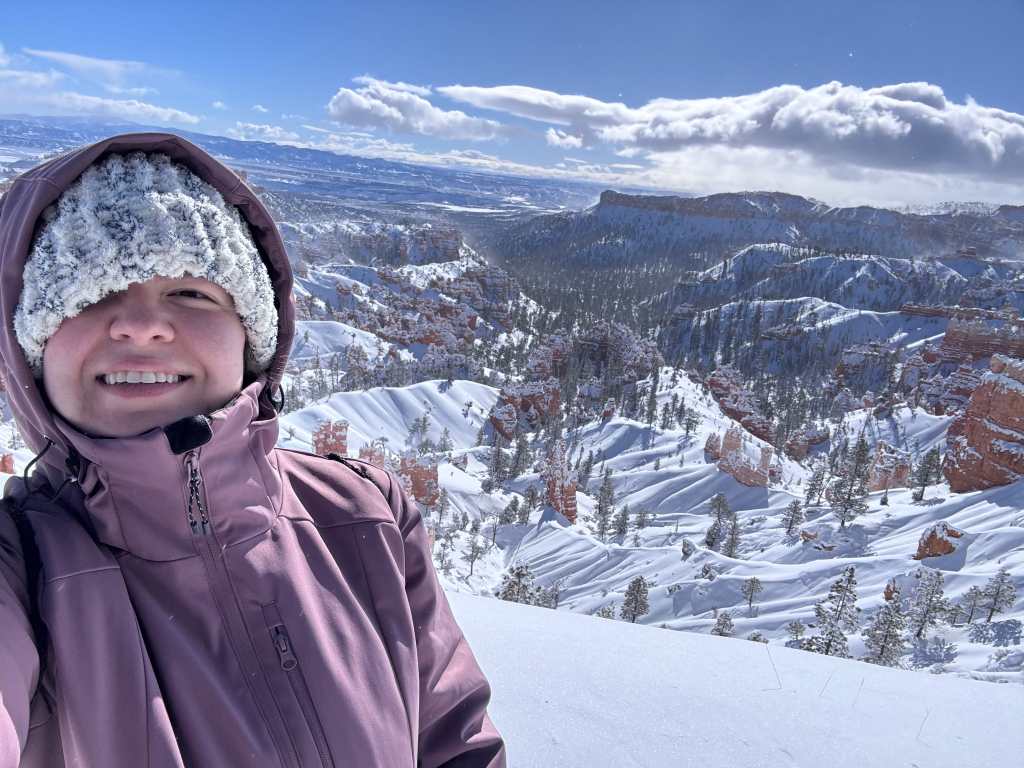
When it comes to hiking in the cold, it’s important to have multiple layers that you can take off one at a time, rather than just a t-shirt with a coat over it. If not, you’re either sweating or freezing the whole hike.
3. Gloves (Real Ones that keep your hands warm)
You’ll want to pack some gloves that:
- Keep your hands warm
- Allow a bit of grip
- Work with trekking poles
It’s not hard at all to find gloves that will do all that, and it’s worth bringing them. You can always stick your hands in your pockets to keep them warm, but when you need your hands to stabilize yourself (whether you’re using a trekking pole or a rock wall) you’ll be happy your hands are warm.
4. Warm Hat or Beanie
Heat escapes from your head quickly, especially in windy conditions, and even if you take your warm hat off halfway through your hike, you’ll want it at the beginning.
I know from experience that your ears won’t be happy with you if you don’t, so take my word for this one.
These are easy to make or you can buy them at most local stores! Here’s a link for one on Amazon too.
5. Hiking or Trekking Poles
Hiking poles are a game changer in winter, because they help stabilize you when you can’t see how rocky the trail is underneath the snow.
They also:
- Help with balance
- Reduce strain on knees
- Make downhill sections way less scary
On icy switchbacks, they’re incredibly helpful. Between the crampon spikes on your shoes/boots and a trekking pole or two, you’re set to feel way more safe and secure on the trails. It makes it so much easier to enjoy the beauty around you when you’re not worried so much about falling.
6. Waterproof or Water-Resistant Boots
Now this is one that I need to actually get and bring, but I think it’s worth mentioning. Snow melts and trails get slushy, and even getting into a warm car after a hike can cause the snow on your feet to melt. Wet socks are SO uncomfortable, and can ruin your day fast.
If you don’t have fully waterproof boots, at least wear thick wool socks. (That’s what I did when I didn’t have time to buy new waterproof boots and I did a bunch of hiking in the snow).
7. Sunglasses (Yes, even in the winter)
This may be unexpected, but we “Utahns” are lucky enough to get a lot of sun even in the winter. The white snow everywhere is especially bright when the sun is shining on it, and if you don’t wear sunglasses your entire day hiking or driving in the snow, you may sunburn your eyes.
Make sure to throw some of these in your hiking pack! I’m serious when I say you’ll regret not bringing them.
8. Small Emergency Kit
In winter especially, bring:
- Extra snacks
- Hand warmers
- A Headlamp (the sun sets earlier)
- A Portable charger
Even though the parks are well maintained, winter conditions can be unpredictable, and it’s better to be safe rather than sorry if the weather turns south. Plus, having extra snacks is always a good idea.
9. Water, water, and more water
So many people who would remember to bring enough water in the summertime neglet bringing as much as they need in the winter. Don’t forget, despite being cold, your body needs just as much water while hiking as it does normally.
Don’t forget to not only pack enough water, but to drink enough water while hiking. It’s never fun to end up with a dehydration headache while you’re on a trip. We can easily avoid that by coming prepared and remembering to drink water.
Utah Winter Hiking Packing List
□ Plenty of water
□ Warm Coat
□ Warm Hat
□ Gloves
□ Layers such as a light hoodie
□ Sunglasses
□ Hiking poles
□ Traction for your shoes (crampons)
□ Handwarmers
□ A Headlamp if hiking after dinner
□ Sunglasses
Hiking in Utah in the winter snow, is absolutely worth it. You just have to pack smart based on the conditions you’ll be facing. If you prepare for the environment instead of assuming it’ll be easy, you’ll enjoy your hikes so much more.
Thanks for reading! Have so much fun hiking in the snow! I wrote another article about what to expect from the Utah National Parks in the winter, so go check that out, and happy traveling!


 McKenna Uncharted