Some people assume that the Mighty 5 Utah National Parks aren’t worth the visit in the winter… but those people couldn’t be more wrong. Not only are the parks more beautiful in the snow, but they’re also less crowded, cheaper to find places to stay at, and an all around better experience.
The only part that can be tricky is knowing what to plan for. Which hikes are worth trudging through the snow? If it’s cold, what are the best activities and things to avoid? In this article, I’ll give you all the tips, tricks, and direction you need to plan a trip to one or all of the Utah National Parks in the winter/early spring.
What to Expect from the Utah National Parks in the Off-Season
You may have some knowledge or at least some ideas of what the parks will be like in the winter, but here’s all the information you need to know to start planning:
Zion National Park in the Off-Season
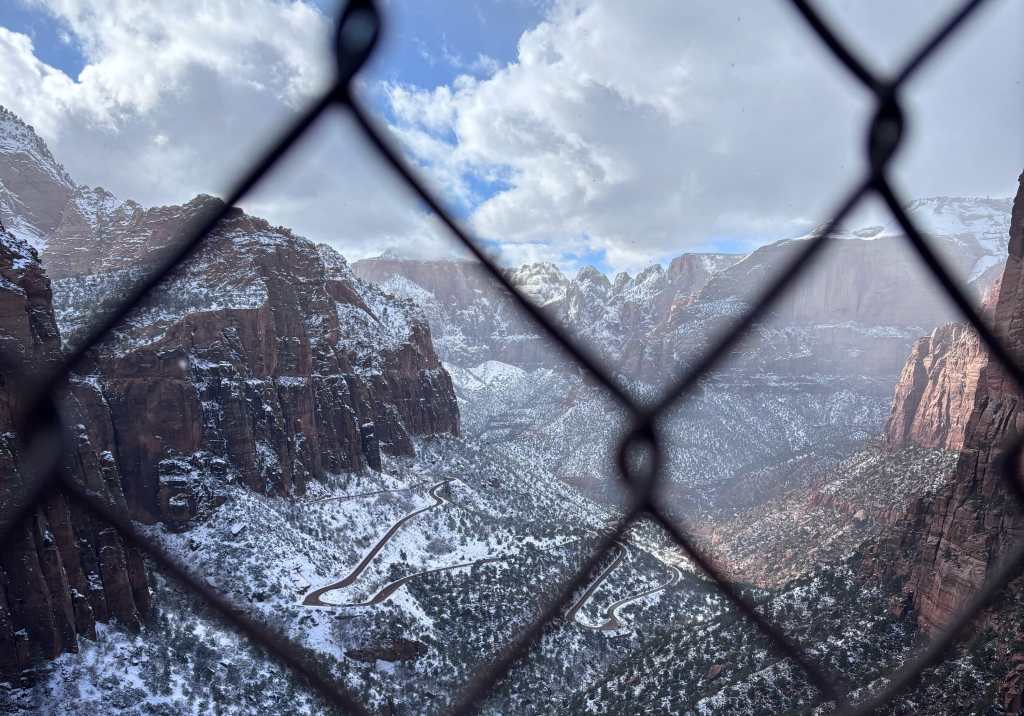
Zion National Park is the most visited park in Utah, and that’s including during the off-season. The biggest off-season perk here is that the shuttle system doesn’t run, and when it’s not operating, you can drive your own vehicle along Zion Canyon Scenic Drive and park at trailheads. This can be convienent but also tricky if parking fills up.
Snow in Zion is usually lighter than at higher elevation parks like Bryce Canyon, but when it does snow, it makes the red cliffs really pretty.
Keep in mind:
- Higher elevation hikes like Angels Landing can have icy sections, so it can become far more dangerous in the winter.
- The Narrows may close if water levels are high or icy conditions become unsafe.
- It’s still busy compared to other parks, just not summer-level busy.
Bryce Canyon National Park in the Off-Season
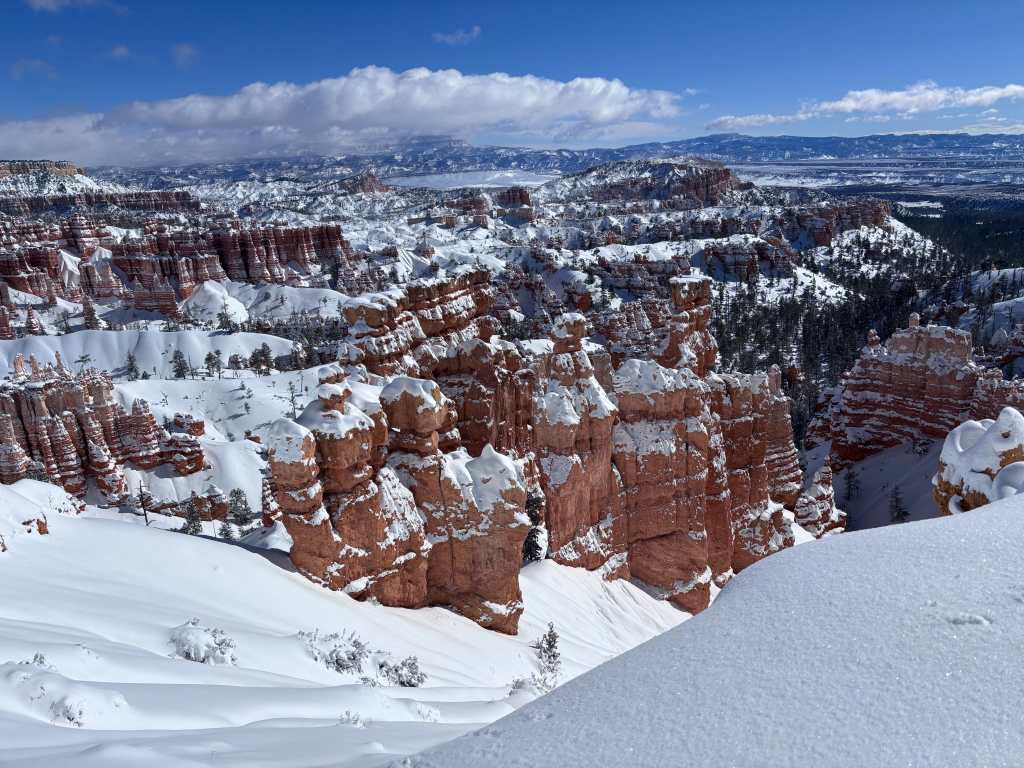
If there’s one park that absolutely shines in winter, it’s Bryce Canyon National Park. Bryce sits at a much higher elevation, which means pretty consistent snow in the winter. The hoodoos (that’s what the tall rock formations are called) when covered in white snow are unreal and easily some of the most photogenic winter scenery in Utah.
The park feels quieter, calmer, and far less hectic than summer. You won’t deal with long entrance lines, and viewpoints are much less crowded.
Things to expect:
- Some trails may close after heavy snowfall.
- Icy switchbacks are common and traction gear is extremely helpful/necessary.
- Temperatures are significantly colder than the other parks, so come prepared.
If you love snowy landscapes and don’t mind bundling up, Bryce in winter is hard to beat. It’s the best National Park to visit in the winter.
Capitol Reef National Park in the Off-Season
Capitol Reef National Park is very peaceful in the winter, though also very windy and chilly.
It’s already less crowded than the others, but in the off-season it can feel almost empty. Snow here is less consistent than Bryce, but when it falls, it adds a subtle beauty to the cliffs and orchards around Fruita.
Winter perks:
- Extremely light crowds
- Cooler temps for longer hikes
- Easy access to main scenic areas
The only downside is that dirt roads and backcountry areas can become muddy or impassable after storms. Always check road conditions before heading out.
Arches National Park in the Off-Season
Arches National Park feels completely different in winter.
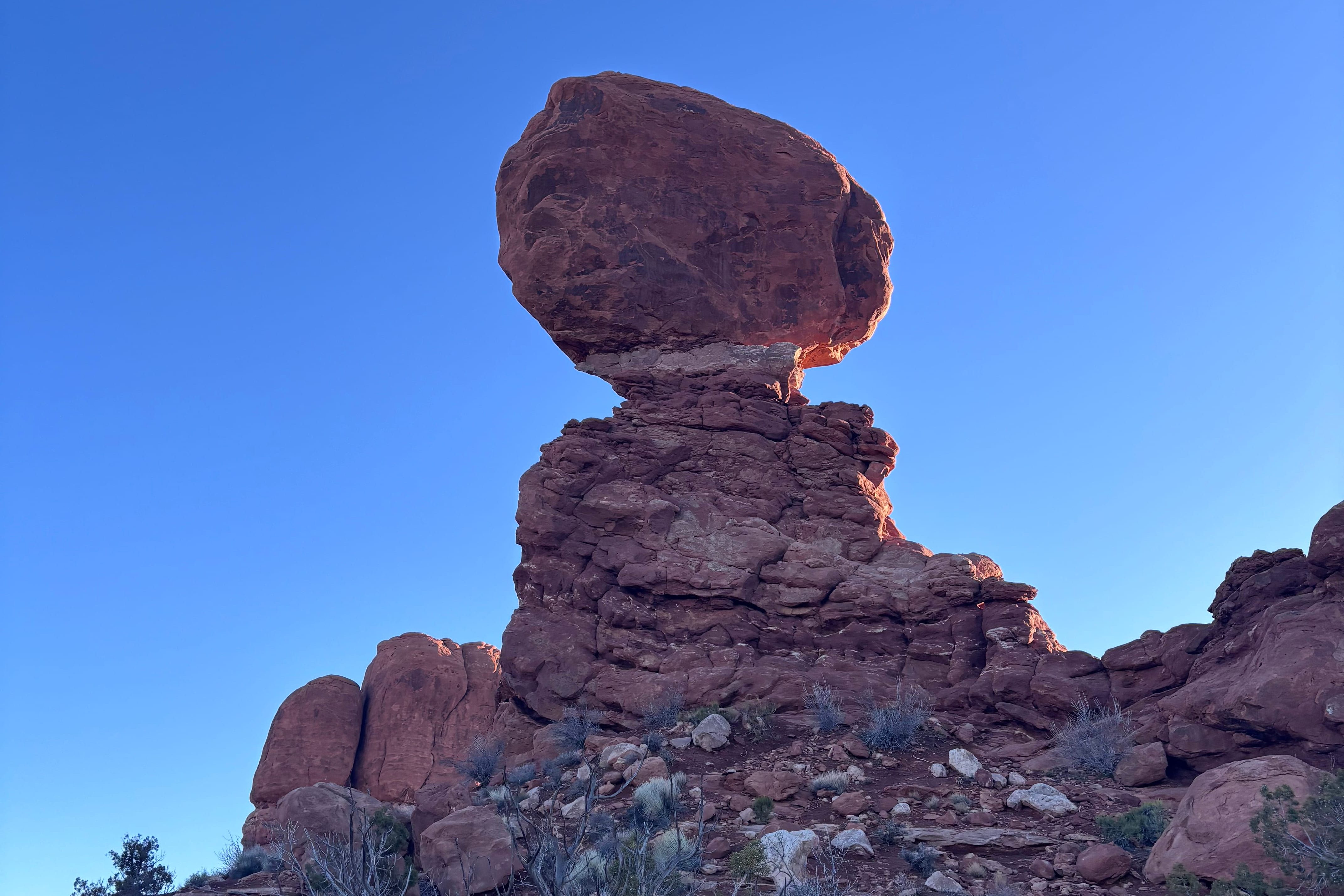
In the summer, it’s hot, crowded, and exposed. In the winter, it’s quieter, cooler, and sometimes surprisingly windy. Snow here is less predictable, but when it dusts the arches, it creates beautiful contrast against the red rock.
What to plan for:
- Wind can be intense, especially at viewpoints.
- Trails may be icy in shaded areas.
- You might get entire hikes almost to yourself.
Winter makes Arches more comfortable temperature-wise and crowd-wise, but you’ll definitely want to layer up and watch the weather forecast.
Canyonlands National Park in the Off-Season
Canyonlands National Park is massive, and the Island in the Sky district is the most accessible year-round and offers some of the best winter viewpoints. Cooler temperatures make hiking much more enjoyable compared to the brutal summer heat.
Winter highlights for Canyonlands National Park:
- Way fewer visitors
- Comfortable hiking temps
Be cautious with more remote districts like The Needles, as road conditions can change quickly after storms. These districts are less popular anyways, but it’s good to mention.
A lot of the popular hikes, including the Mesa Arch Trail, are relatively easy and so they’re very good winter hikes for when there’s a bit of snow.
5 Things to keep in mind when visiting the Utah National Parks in the winter
There’s some things that you might not think about while getting ready to visit the Mighty 5 Parks in Utah in the winter, so that’s why I’m here! Here’s the 3 main things to remember and think about before you go:
1. Come with your vehicle prepared for the snow
Make sure you bring snow chains for your vehicle. It’s unlikely that you’ll need them because the parks are great about plowing the snow every morning. Bring emergency preparedness gear just in case your car gets stuck. Plan for the worst, but expect to not have to use any of it. Better to be prepared than not when you need it!
2. Dress Warm
I brought my super warm winter coat and boy did I need it! I didn’t bring gloves but luckily the pockets of my coat kept my hands warm. I reccomend some nice thick gloves because then you can use your hands to stabilize you on hikes or use hiking poles without your hands freezing. And bring a comfy but warm hat.
3. Bring Snow-adventure gear
If it’s looking like it’s going to snow while you’re at the parks, you’ll want to come prepared with the equiptment you need to enjoy the parks to the fullest.
The most important thing to get if you love to hike like me is traction additions for your shoes/boots. These Crampons are my favorite because they’re affordable, comfortable, and very effective!
It’s also helpful to have good hiking boots in general, but you don’t need these as much when you have the traction additions.
Hiking or Trekking Poles are also very useful when hiking in the snow. They make it easier to balance, especially when the snow is a little bit slippery or the rockiness of the trail is covered in the snow.
4. Bring Sunglasses
I cannot stress this one enough! It may be unexpected, but we “Utahns” are lucky enough to get a lot of sun even in the winter. The white snow everywhere is especially bright when I sun is shining on it, and if you don’t wear sunglasses your entire day hiking or driving in the snow, you may sunburn your eyes.
If you’re not completely covered by all of your warm gear, consider using sunscreen as well, because whether or not it’s hot outside the sun will still give you burns!
5. Take time to find the Off-Season Deals you deserve
Especially when it comes to places you should stay, you’ll find that it’s SO much cheaper to travel to the Utah National Parks in the winter/off-season because the hotels aren’t all booked out. Usually hotels are at a discounted price, but it’s worth it to take the time and compare prices for the places you want to stay.
There’s lots of booking websites that can help you find the perfect place to stay to not only give you a great experience, but save you some money too!
Are the Utah National Parks Better With or Without the Snow?
So… this is a very devisive question, because most people will say that the Utah National Parks are better in the summer when there’s no snow in the way, but some people are very adimant that the parks are incredibly more beautiful and more fun with the snow.
How do I feel about it? Well, I think it depends on which park we’re talking about. I actually have an entire article about which Utah National Parks are better with or without the snow, so you can read that for more information, and my opinions.
Final Thoughts on Visiting the Mighty 5 in Winter
Visiting Utah’s Mighty 5 in the winter isn’t for everyone, but if you’re willing to bundle up and plan ahead, it can be one of the most rewarding experiences you’ll have in the Southwest.
You’ll get quieter viewpoints, cheaper hotel stays, peaceful hikes, and landscapes that look completely different than they do in the summer. There’s something really special about standing in front of towering red rock cliffs dusted with snow, with only a handful of other people around, if anyone else at all.
Winter in Zion National Park, Bryce Canyon National Park, Capitol Reef National Park, Arches National Park, and Canyonlands National Park feels slower, calmer, and more intimate. It allows you to experience these iconic parks in a way that most summer visitors never will.
If you love adventure, don’t mind layering up, and prefer fewer crowds over warm temperatures, the off-season might just become your favorite time to visit. And honestly? Once you see those red rocks covered in snow, you might never look at summer the same way again.
This article contains affiliate links. If items are purchased through these links, I get a small commission at no extra cost to you.

 McKenna Uncharted